

 Buying Guide
How to Choose the Right Power Bank: 10000 vs 20000 vs 30000mAh
A power bank is one of the most useful gadgets you can own, but the numbers on the box can be confusing. This guide explains what to look for so you buy the right one.
1. Pick the right capacity
Capacity is measured in mAh (milliamp hours). A bigger number means more charge, but also more weight and a higher price.
Power banks lose some energy as heat during charging, so you get roughly 60–70% of the printed capacity. These are rough figures for a phone with a 4,500mAh battery:
Capacity | Approx. phone charges | Best for |
|---|---|---|
10000mAh | About 1.5 to 2 | Daily carry, short trips |
20000mAh | About 3 to 4 | Long days, travel, sharing |
30000mAh | About 5 to 6 | Camping, trips with no power, phone plus tablet |
If you only need an emergency top-up, 10000mAh is light and easy to carry. If you travel a lot or use your phone heavily, 20000mAh is the best balance.
2. Check the fast charging output
Capacity tells you how much, but output tells you how fast. Look for:
- PD (Power Delivery): the standard for iPhones, many Android phones, tablets and small laptops
- QC (Quick Charge): common on many Android phones
- 22.5W or higher: a good speed for modern phones
If your phone supports fast charging but your power bank doesn’t, it will charge slowly. Check both sides before buying.
3. Look at the ports
Pick a power bank with the ports you need:
- USB-C: works for both charging the power bank and charging your devices
- USB-A: useful for older cables and accessories
- Two or more outputs: lets you charge two devices at once
Remember that fast charging speed is usually shared when two ports are in use.
4. Safety features matter
A cheap, poorly made power bank can overheat or fail. Check that it has protection against:
- Over-charging
- Short circuits
- Over-heating
- Over-current
Buy from a seller who guarantees genuine products and offers a warranty. A few hundred taka saved isn’t worth a damaged phone.
5. Flying with a power bank
Power banks must go in your carry-on bag, not checked luggage. Most airlines allow batteries up to about 100Wh, which is roughly 27,000mAh. That means 10000mAh and 20000mAh models are generally fine, while a 30000mAh model may be over the limit. Rules differ by airline, so check before you fly.
6. Don’t forget the small things
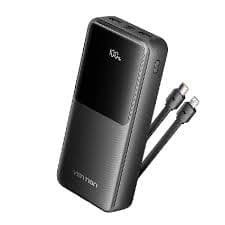
- A digital display shows the exact battery percentage, which is better than four small lights.
- A good cable: a weak cable can slow down even the best power bank.
- Size and weight: a 30000mAh power bank is heavy, so make sure you’ll actually carry it.
Quick recommendation
- Light daily use: 10000mAh
- Heavy use, travel or sharing: 20000mAh
- Long trips, laptops or multiple devices: 30000mAh
Where to buy
The Imnexia Fast Charging Power Bank has USB-C PD 22.5W fast charging, an LED battery display and built-in safety protection. It comes in 10000mAh (৳1,790), 20000mAh (৳2,690) and 30000mAh (৳3,490), with Cash on Delivery available.